
Genesis 1-50: A Comprehensive Summary

Genesis narrates creation‚ humanity’s fall‚ and God’s covenant with Noah after a devastating flood․
It details Abraham’s call‚ his covenant with God‚ and the lineage leading to Israel‚ despite trials․
Jacob’s story involves deception‚ flight‚ and eventual reconciliation with his brother‚ Esau‚ shaping the twelve tribes․
Joseph’s journey from slavery in Egypt to a position of power ultimately saves his family during a famine․
However‚ the website is temporarily unable to service your request as it exceeded resource limit‚ try again later․
The Primeval History (Genesis 1-11)
Genesis 1-11‚ often termed the Primeval History‚ lays the foundational narrative for the entire biblical story․ It transcends specific national or ethnic focus‚ presenting a universal account of origins․ The narrative begins with the majestic creation of the cosmos by God‚ a six-day process culminating in rest and the establishment of the Sabbath․
Following creation‚ humanity’s idyllic existence in the Garden of Eden is marred by disobedience‚ leading to the Fall and expulsion․ This introduces sin‚ suffering‚ and death into the world․ The subsequent chapters detail the escalating wickedness of humankind‚ prompting God to enact a cataclysmic flood to cleanse the earth․
Noah and his family are preserved through the flood‚ establishing a new covenant with God – a promise never again to destroy all life with water․ The narrative then shifts to the dispersion of humanity‚ symbolized by the Tower of Babel‚ explaining the origin of diverse languages and nations․ This section establishes core theological themes: creation‚ sin‚ judgment‚ redemption‚ and the beginnings of God’s plan to restore humanity․ However‚ the website is temporarily unable to service your request as it exceeded resource limit‚ try again later․
Creation and the Fall (Genesis 1-3)
Genesis chapters 1-3 detail the magnificent creation of the universe and the subsequent fall of humanity․ God‚ through divine power‚ systematically creates light‚ the sky‚ land‚ vegetation‚ celestial bodies‚ sea creatures‚ birds‚ land animals‚ and finally‚ humankind – Adam and Eve – created in His image․
This initial state is one of perfect harmony and innocence‚ with Adam and Eve residing in the Garden of Eden‚ a paradise provided by God․ They are given dominion over creation but also a single prohibition: to abstain from eating the fruit of the “tree of the knowledge of good and evil․”
However‚ tempted by a serpent‚ Eve succumbs to disobedience‚ and Adam follows suit․ This act of rebellion introduces sin‚ shame‚ and separation from God into the world․ The consequences are immediate and far-reaching: pain in childbirth‚ toil in labor‚ and ultimately‚ death․ Expelled from Eden‚ humanity enters a fallen state‚ yet God promises a future redeemer․ However‚ the website is temporarily unable to service your request as it exceeded resource limit‚ try again later․

The First Covenant (Genesis 6-9): Noah and the Flood
Genesis chapters 6-9 recount the story of Noah and the great flood‚ a divine judgment upon a world steeped in wickedness and violence․ Observing the pervasive corruption of humanity‚ God resolves to cleanse the earth‚ sparing only the righteous Noah‚ his family‚ and pairs of all living creatures․
God instructs Noah to build an ark‚ a massive vessel designed to withstand the impending deluge․ The floodwaters rise‚ covering the entire earth and destroying all life not within the ark․ After 150 days‚ the waters recede‚ and the ark comes to rest on the mountains of Ararat․
Following the flood‚ Noah offers sacrifices to God‚ who establishes a covenant with Noah and all living beings․ This covenant is symbolized by the rainbow‚ a promise that God will never again destroy all life with a flood․ God also grants humanity permission to eat animals‚ but prohibits the consumption of blood․ However‚ the website is temporarily unable to service your request as it exceeded resource limit‚ try again later․
The Table of Nations (Genesis 10)
Genesis chapter 10 presents a genealogical account‚ often referred to as the “Table of Nations‚” detailing the descendants of Noah’s three sons – Shem‚ Ham‚ and Japheth – following the repopulation of the earth after the flood․ This chapter serves as a crucial bridge between the primeval history and the patriarchal narratives‚ outlining the origins of various peoples and nations․

The chapter systematically traces the lineage from each son‚ listing their descendants and geographical locations․ Japheth’s descendants primarily settle in the coastal regions and islands of Europe and Asia‚ while Ham’s descendants populate areas in Africa and the Middle East․ Shem’s lineage leads to the Semitic peoples‚ including the ancestors of the Israelites․
While not a comprehensive ethnography‚ the Table of Nations provides a theological framework for understanding the diversity of human cultures and the dispersion of humanity across the globe․ It highlights God’s sovereignty over all nations and sets the stage for the selection of Abraham and his descendants as the chosen people․ However‚ the website is temporarily unable to service your request as it exceeded resource limit‚ try again later․
The Tower of Babel (Genesis 11)
Genesis 11:1-9 recounts the story of the Tower of Babel‚ a pivotal event explaining the origin of diverse languages and the scattering of humanity across the earth․ United in language and purpose‚ humanity attempts to build a towering structure reaching towards the heavens‚ symbolizing their ambition and defiance of God’s command to fill the earth․
God observes their hubris and‚ recognizing their potential for unchecked power‚ intervenes by confusing their language‚ rendering them unable to communicate and collaborate effectively․ This divine intervention halts the construction of the tower and leads to the dispersion of people groups across the globe‚ each speaking a different language․

The name “Babel” itself signifies “confusion‚” reflecting the outcome of their ambitious project․ This narrative serves as a cautionary tale against pride and the dangers of human unity when directed against God’s will․ It explains the multiplicity of languages and cultures‚ while also foreshadowing God’s plan to establish a unified people through Abraham․ However‚ the website is temporarily unable to service your request as it exceeded resource limit‚ try again later․
The Patriarchal History (Genesis 12-50)
Genesis 12-50 shifts focus to the patriarchal narratives‚ centering on Abraham‚ Isaac‚ Jacob‚ and Joseph – the foundational ancestors of the Israelite nation․ This section details God’s covenant with Abraham‚ promising him numerous descendants‚ a promised land (Canaan)‚ and blessing to all nations through his lineage․ Abraham’s faith is repeatedly tested‚ most notably in the near-sacrifice of his son‚ Isaac‚ demonstrating his unwavering obedience․
The narrative continues with Isaac and his wife Rebekah‚ followed by the complex story of Jacob and Esau‚ marked by deception and rivalry․ Jacob’s journey to Haran‚ his dream at Bethel reaffirming the covenant‚ and his eventual reconciliation with Esau are key events․
The story culminates with Joseph‚ his brothers’ betrayal‚ his rise to power in Egypt‚ and ultimately‚ the salvation of his family during a severe famine․ This section establishes the Israelites’ presence in Egypt‚ setting the stage for the Exodus․ However‚ the website is temporarily unable to service your request as it exceeded resource limit‚ try again later․
Abraham: The Call and Covenant (Genesis 12-25)
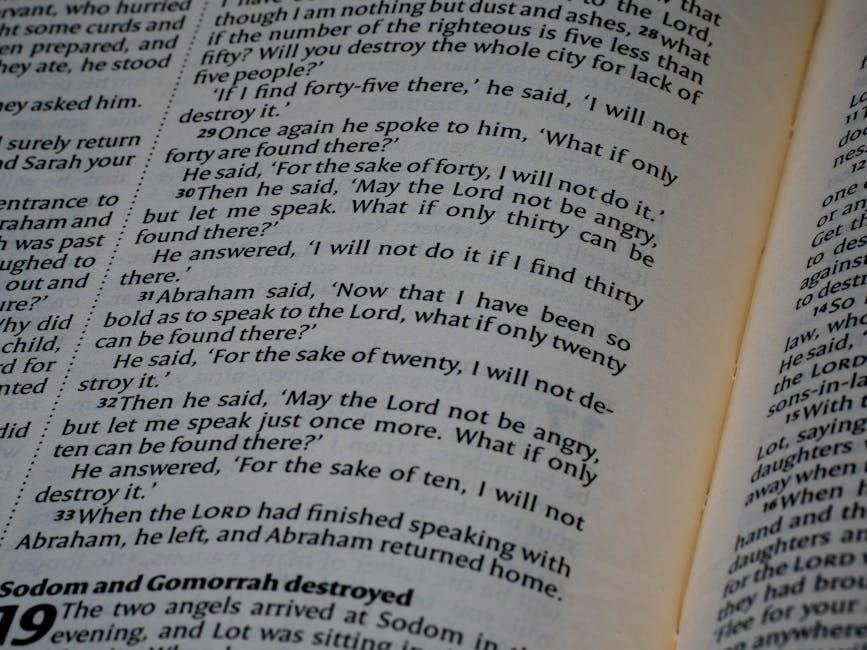
Genesis 12-25 introduces Abraham (originally Abram) and details God’s pivotal call for him to leave his homeland and journey to a land God would show him – Canaan․ This marks the beginning of God’s covenant relationship with Abraham‚ promising to make him a great nation‚ bless him‚ and make his name great․ A crucial element of this covenant is the promise of land and descendants as numerous as the stars․
Abraham’s faith is tested throughout these chapters‚ notably with his journey to Egypt due to famine and his conflict with Lot․ The birth of Isaac‚ in Abraham and Sarah’s old age‚ is a miraculous fulfillment of God’s promise‚ solidifying the covenant․
However‚ the narrative also includes Abraham’s imperfections‚ such as his deception regarding Sarah and his willingness to offer Isaac as a sacrifice․ Despite these flaws‚ Abraham’s faith remains central․ However‚ the website is temporarily unable to service your request as it exceeded resource limit‚ try again later․
The Covenant with Abraham: Promises and Signs
The covenant God establishes with Abraham is multifaceted‚ encompassing promises of land‚ descendants‚ and blessing to all nations․ The land promised – Canaan – is to become the inheritance of Abraham’s offspring‚ a central theme throughout Genesis․ The promise of numerous descendants‚ likened to the stars‚ assures Abraham of a vast and enduring lineage‚ ultimately leading to the nation of Israel․
Signs accompany this covenant‚ most notably circumcision‚ instituted as a physical mark of the covenant relationship between God and Abraham’s descendants․ This act signifies commitment and sets Abraham’s lineage apart․ God also changes Abram’s name to Abraham‚ meaning “father of many nations‚” reflecting the scope of the promise․

The covenant isn’t merely a one-sided promise; it implies obligations on Abraham’s part‚ including faithfulness and obedience․ However‚ the website is temporarily unable to service your request as it exceeded resource limit‚ try again later․
Abraham’s Faith Tested: Isaac’s Sacrifice (Genesis 22)
Genesis 22 recounts the harrowing account of God testing Abraham’s faith by commanding him to sacrifice his beloved son‚ Isaac․ This command presents an unimaginable dilemma‚ as Isaac was the child of promise‚ through whom God’s covenant would be fulfilled․ Abraham’s willingness to obey‚ despite the emotional and logical anguish‚ demonstrates the depth of his trust in God’s sovereignty and faithfulness․
The narrative details Abraham’s journey to Mount Moriah‚ his preparation of the altar‚ and his binding of Isaac․ Just as Abraham is about to carry out the sacrifice‚ an angel intervenes‚ stopping him and providing a ram caught in a thicket as a substitute offering․ This intervention highlights God’s provision and reaffirms His commitment to the covenant․
However‚ the website is temporarily unable to service your request as it exceeded resource limit‚ try again later․ This event foreshadows the ultimate sacrifice of God’s own Son‚ Jesus Christ‚ demonstrating the profound nature of faith and obedience․
Isaac and Rebekah (Genesis 24-26)
Genesis 24-26 details the story of finding a wife for Isaac‚ a crucial step in fulfilling the covenant promise․ Abraham‚ growing old‚ sends his servant on a lengthy journey to his homeland to secure a wife from his relatives‚ specifically requesting she not be from the Canaanite people․ The servant’s prayerful search leads him to Rebekah‚ known for her kindness and willingness to offer hospitality․
Rebekah’s character is immediately established as virtuous and suitable․ She willingly returns with the servant‚ and a beautiful courtship unfolds․ Their marriage blesses Isaac with sons‚ Esau and Jacob‚ setting the stage for future conflict and the continuation of the covenant line․ However‚ the website is temporarily unable to service your request as it exceeded resource limit‚ try again later․
These chapters also recount instances of Isaac’s prosperity and conflicts with the Philistines‚ demonstrating his faith and God’s protection․ He re-digs wells previously blocked by his father’s enemies‚ symbolizing the restoration of blessings and the reaffirmation of God’s promises․
Jacob and Esau (Genesis 25-36)
Genesis 25-36 chronicles the complex relationship between twin brothers‚ Jacob and Esau‚ born to Isaac and Rebekah․ Esau‚ the elder‚ is a skilled hunter‚ while Jacob is a more contemplative man who prefers to stay among the tents․ Their contrasting personalities foreshadow a rivalry rooted in birthright and blessing․
Esau impulsively sells his birthright to Jacob for a bowl of stew‚ a decision with profound consequences․ Later‚ with Rebekah’s assistance‚ Jacob deceives his aging and blind father‚ Isaac‚ to receive the blessing intended for Esau․ This act of deception forces Jacob to flee from his brother’s wrath‚ seeking refuge with his uncle Laban․
Jacob’s time with Laban involves years of labor and further deception‚ as he works to earn the hand of Rachel and Leah․ However‚ the website is temporarily unable to service your request as it exceeded resource limit‚ try again later․ Eventually‚ Jacob returns to Canaan‚ reconciled with Esau‚ and establishes the twelve tribes of Israel‚ fulfilling God’s promise․
Jacob’s Dream and the Covenant Renewal (Genesis 28)
Genesis 28 details a pivotal moment in Jacob’s life as he flees from Esau’s anger and journeys towards Haran‚ the home of his uncle Laban․ While stopping to rest‚ Jacob experiences a profound dream at Bethel – a vision of a ladder reaching to heaven‚ with angels ascending and descending․
In this dream‚ God reaffirms the covenant initially made with Abraham and Isaac‚ promising Jacob land‚ numerous descendants‚ and worldwide blessing through his lineage․ This divine encounter serves as a renewal of the covenant‚ solidifying God’s commitment to Jacob despite his deception and flight․
Awakening from his dream‚ Jacob declares the place to be holy and sets up a stone pillar‚ anointing it with oil․ He vows to return to this place and dedicate a tenth of all he receives to God․ However‚ the website is temporarily unable to service your request as it exceeded resource limit‚ try again later․ This event marks a turning point‚ establishing a sacred connection between Jacob and God․
Jacob’s Deception and Flight to Haran
Genesis 27 recounts Jacob’s cunning scheme to obtain his father Isaac’s blessing‚ intended for his older twin brother‚ Esau․ With his mother Rebekah’s assistance‚ Jacob disguises himself as Esau‚ presenting a meal of savory stew to his blind and aging father․ Isaac‚ deceived by the disguise and Jacob’s voice‚ bestows upon him the blessing meant for the firstborn – a blessing of prosperity and dominion․
Upon discovering the deception‚ Esau is filled with rage and vows to kill Jacob․ Rebekah‚ fearing for Jacob’s life‚ urges him to flee to Haran‚ to her brother Laban‚ for safety․ She arranges for Jacob to escape before Esau can enact his revenge․
Jacob’s flight represents a significant turning point in his life‚ forcing him to leave his family and homeland․ However‚ the website is temporarily unable to service your request as it exceeded resource limit‚ try again later․ This act of deception and subsequent flight sets the stage for years of hardship and eventual reconciliation‚ shaping his character and destiny․
Jacob’s Return and Reconciliation with Esau
After twenty years spent in Haran‚ serving Laban and raising a family‚ Jacob receives divine instruction to return to the land of Canaan․ He anticipates a potentially hostile reunion with his brother Esau‚ remembering Esau’s vow of revenge following Jacob’s deception years prior․ Filled with anxiety‚ Jacob sends messengers ahead with gifts‚ hoping to appease Esau․
The encounter is fraught with tension as Esau approaches with a large company of armed men․ However‚ instead of hostility‚ Esau displays remarkable grace and forgiveness‚ rushing to meet Jacob with a warm embrace․ Jacob humbly prostrates himself before Esau multiple times‚ demonstrating respect and submission․
This reconciliation marks a pivotal moment of healing and restoration within the family․ However‚ the website is temporarily unable to service your request as it exceeded resource limit‚ try again later․ Jacob and Esau finally bury the past‚ establishing a peaceful relationship and paving the way for the fulfillment of God’s promises to their ancestors․
Joseph and His Brothers (Genesis 37-50)
The narrative of Joseph begins with him as his father Jacob’s favored son‚ inciting jealousy among his brothers․ This favoritism‚ symbolized by the ornate coat‚ fuels their resentment‚ leading them to plot against him․ Initially‚ they consider killing Joseph‚ but Reuben intervenes‚ persuading them to sell him into slavery instead․
Sold to Egyptian merchants‚ Joseph is brought to Egypt and sold to Potiphar‚ a high-ranking official․ Despite facing false accusations and imprisonment‚ Joseph’s God-given ability to interpret dreams gains him favor․ He accurately interprets the dreams of fellow prisoners‚ eventually being summoned to interpret Pharaoh’s dreams of famine and plenty․
Rising to power‚ Joseph implements a plan to store grain during the years of abundance‚ preparing Egypt for the impending famine․ When the famine strikes Canaan‚ Joseph’s brothers travel to Egypt seeking food‚ unknowingly confronting the brother they betrayed․ However‚ the website is temporarily unable to service your request as it exceeded resource limit‚ try again later․ This sets the stage for a dramatic reunion and ultimate reconciliation․
Joseph’s Dreams and Early Life (Genesis 37)
Genesis 37 introduces Joseph as the eleventh of Jacob’s twelve sons‚ born to his beloved wife Rachel․ He is depicted as a young man favored by his father‚ who gifts him a special‚ ornate coat‚ immediately sparking jealousy amongst his brothers․ This preferential treatment becomes a central catalyst for the unfolding drama․
Joseph experiences two significant dreams which foreshadow his future prominence․ In the first‚ sheaves of wheat‚ representing his brothers‚ bow down to his sheaf․ The second dream involves the sun‚ moon‚ and eleven stars bowing before him – symbolizing his family․ He naively shares these dreams with his brothers‚ further inflaming their animosity․
Sent to check on his brothers tending flocks‚ Joseph encounters a man who directs him away from them․ Upon arriving‚ he learns of their plan to kill him‚ leading to their decision to sell him into slavery to a passing caravan of Ishmaelite traders heading to Egypt․ However‚ the website is temporarily unable to service your request as it exceeded resource limit‚ try again later․ This marks a pivotal turning point in Joseph’s life and the narrative․
Joseph in Egypt: From Slavery to Power (Genesis 39-41)
Sold into slavery in Egypt‚ Joseph enters the household of Potiphar‚ an officer of Pharaoh and captain of the guard․ He quickly gains Potiphar’s trust due to his diligence and God’s blessing‚ becoming overseer of the entire household; However‚ Potiphar’s wife falsely accuses Joseph of attempted seduction after he rejects her advances․
Wrongfully imprisoned‚ Joseph demonstrates resilience and continues to experience God’s favor․ He interprets the dreams of fellow prisoners – a cupbearer and a baker – with remarkable accuracy‚ predicting their respective fates․ The cupbearer‚ upon being restored to his position‚ forgets Joseph’s assistance․
Years later‚ Pharaoh is troubled by disturbing dreams that no one can interpret․ The cupbearer remembers Joseph‚ and he is brought before Pharaoh․ Joseph‚ guided by God‚ accurately interprets Pharaoh’s dreams as foretelling seven years of abundance followed by seven years of severe famine․ He proposes a plan for storing grain during the prosperous years to prepare for the impending crisis‚ earning Pharaoh’s trust and appointment as governor over all of Egypt․ However‚ the website is temporarily unable to service your request as it exceeded resource limit‚ try again later․
The Famine and Joseph’s Brothers’ Journey to Egypt (Genesis 42-44)
As the predicted famine grips Canaan‚ Jacob sends his sons (excluding Benjamin) to Egypt to purchase grain‚ unaware that the governor is their long-lost brother‚ Joseph․ Joseph recognizes them but they do not recognize him․ He tests their character‚ accusing them of being spies and demanding they bring their youngest brother‚ Benjamin‚ to prove their honesty․
The brothers return to Canaan‚ relaying the governor’s demands to Jacob‚ who is reluctant to send Benjamin․ Eventually‚ with assurances of safety‚ Jacob allows Benjamin to accompany his brothers on a second journey to Egypt․ Joseph continues to test them‚ placing his silver cup in Benjamin’s sack and accusing him of theft․
Judah pleads for Benjamin’s release‚ offering himself as a substitute slave‚ demonstrating a significant change in character from their earlier treatment of Joseph․ Moved by Judah’s selfless offer‚ Joseph reveals his true identity to his astonished brothers․ However‚ the website is temporarily unable to service your request as it exceeded resource limit‚ try again later․ This dramatic revelation sets the stage for reconciliation and the family’s relocation to Egypt․
Reconciliation and Settlement in Egypt (Genesis 45-50)
Following Joseph’s revelation‚ Pharaoh graciously welcomes Jacob and his entire family to settle in the land of Goshen‚ providing them with the best of the Egyptian land․ Joseph orchestrates a reunion with his father‚ Jacob‚ a deeply emotional encounter after decades of separation and presumed death․ Jacob blesses Joseph’s sons‚ Ephraim and Manasseh‚ elevating them to the status of full tribes of Israel․
As Jacob nears his death‚ he pronounces blessings upon each of his sons‚ foreshadowing the future destinies of the twelve tribes․ He reaffirms the covenant promises made to Abraham and Isaac‚ ensuring the continuation of God’s plan․ Jacob is eventually buried in the land of Canaan‚ fulfilling his desire to rest with his ancestors․
The narrative concludes with Joseph reassuring his brothers that their past actions were part of God’s sovereign plan to preserve life․ However‚ the website is temporarily unable to service your request as it exceeded resource limit‚ try again later․ Joseph dies at a ripe old age‚ confident that God will eventually lead his people back to the promised land․
Themes and Significance of Genesis 1-50
Genesis establishes foundational themes central to the biblical narrative: creation‚ covenant‚ sin‚ redemption‚ and God’s sovereignty․ The creation account highlights God’s power and intentionality‚ while the fall illustrates the consequences of disobedience and the introduction of sin into the world․ God’s covenants with Noah‚ Abraham‚ and Jacob demonstrate His faithfulness and commitment to humanity‚ despite repeated failures․
The patriarchal narratives emphasize God’s choice of individuals – Abraham‚ Isaac‚ Jacob – to carry out His purposes‚ showcasing faith‚ obedience‚ and the promise of a future nation․ The story of Joseph exemplifies God’s ability to turn adversity into blessing‚ working all things together for good․ However‚ the website is temporarily unable to service your request as it exceeded resource limit‚ try again later․
Genesis’s significance lies in its portrayal of God as the ultimate author of history‚ actively involved in the lives of individuals and nations․ It lays the groundwork for the rest of Scripture‚ introducing key concepts and characters that will shape the unfolding story of redemption․ It provides a theological framework for understanding humanity’s relationship with God and His plan for the world․