

The rising popularity of lip augmentation, fueled by social media and celebrity trends, necessitates a comprehensive understanding of injection techniques.
Modern aesthetic practices increasingly focus on subtle enhancements, moving away from overly dramatic results, as evidenced by discussions surrounding various methods.
Expert practitioners emphasize the sensitivity of lip filler procedures, tailoring approaches to individual anatomy for optimal and safe outcomes.
Overview of Lip Fillers
Lip fillers have transitioned from a niche cosmetic procedure to a mainstream aesthetic treatment, driven by increased social acceptance and accessibility. These injectable gels, commonly hyaluronic acid (HA) based, restore volume, enhance shape, and address asymmetries.
The demand is significantly influenced by platforms like TikTok, where open discussions about cosmetic enhancements are prevalent.
Understanding the diverse range of available fillers and their specific properties is crucial for practitioners aiming to achieve natural-looking, individualized results, reflecting a shift towards refined aesthetics.
History and Evolution of Lip Filler Techniques
Initially, lip augmentation relied on permanent fillers, often with undesirable outcomes. The advent of temporary, hyaluronic acid-based fillers marked a significant evolution, offering reversibility and improved safety profiles.
Early techniques focused on simple linear threading, gradually progressing to more sophisticated methods like bolus injections and, recently, the popular Russian lip technique.
This evolution reflects a growing emphasis on natural-looking results and a deeper understanding of lip anatomy, driven by practitioner experience and ongoing research.
Understanding Lip Anatomy for Injection
Precise knowledge of lip anatomy is crucial for safe and effective filler injections, considering unique variations in each patient’s lip structure.
Key Anatomical Landmarks
Identifying key anatomical landmarks is paramount for successful lip filler injections. These include the vermilion border, philtral columns, and Cupid’s bow, defining the lip’s shape and volume. Understanding the underlying musculature, like the orbicularis oris, guides precise product placement.
Furthermore, recognizing the mentalis muscle’s influence on lower lip projection is vital. Accurate landmark identification minimizes risks and maximizes aesthetic results, ensuring natural-looking lip augmentation tailored to individual facial features.
Vascular Considerations & Safety
Prioritizing vascular safety is non-negotiable in lip filler procedures. The lips possess a dense vascular network, demanding meticulous technique to avoid intravascular injection. Practitioners must possess a thorough understanding of facial artery anatomy and potential collateral circulation.
Immediate recognition and prompt treatment of vascular occlusion are crucial, often involving hyaluronidase. Thorough patient screening for pre-existing vascular conditions is also essential for minimizing risks and ensuring patient wellbeing.

Common Lip Filler Products
Hyaluronic acid (HA) fillers dominate the market due to their reversibility and natural-looking results, while non-HA options like PMMA offer longer-lasting effects.
Hyaluronic Acid (HA) Fillers
HA fillers are the most frequently used due to their safety profile and ability to be dissolved with hyaluronidase, offering a corrective measure if needed.
Different HA formulations vary in particle size and cross-linking, influencing viscosity and duration; this allows practitioners to customize treatments for specific lip concerns.
Popular brands include Juvederm and Restylane, each offering various products designed for volume, definition, or hydration, catering to diverse patient goals and anatomical needs.
Non-HA Fillers (e.g., PMMA)
Polymethylmethacrylate (PMMA) fillers, while less common for lips, offer a permanent solution by stimulating collagen production. However, their permanence also means corrections are challenging.
Due to the risk of long-term complications like granuloma formation and migration, PMMA requires exceptional injector skill and careful patient selection.
HA fillers remain the gold standard due to their reversibility and predictable results, making PMMA a less frequently chosen option for lip augmentation procedures.
Traditional Lip Filler Techniques
Established methods like linear threading and the bolus technique form the foundation of lip augmentation, offering controlled volume and shape adjustments.
These techniques prioritize predictable outcomes and are widely taught, representing the core skillset for many practitioners.
Linear Threading
Linear threading involves depositing small amounts of filler along the length of the lip, creating a smooth, even volume distribution. This technique is favored for its subtlety and ability to define the lip border without significant projection.
Practitioners often utilize this method to address overall lip thinning or to enhance the natural lip shape, focusing on creating a balanced and harmonious aesthetic. It’s considered a foundational technique, offering predictable results and minimizing the risk of overcorrection.
Bolus Technique
The bolus technique employs strategically placed, larger deposits of filler to create volume and definition in specific areas of the lip. This method is particularly effective for augmenting the vermillion border or adding projection to the central lip.
It requires a precise understanding of lip anatomy to avoid irregularities and ensure a natural-looking result. Skilled injectors carefully modulate the amount of filler used in each bolus, tailoring the technique to individual patient needs and desired outcomes.
Advanced Lip Filler Techniques
Innovative methods like the Russian lip technique and pre-jowl lifts demonstrate a shift towards nuanced lip augmentation and perioral rejuvenation strategies.
Russian Lip Technique
The Russian lip technique, gaining traction through platforms like TikTok, involves injecting filler to lift and define the lip peaks, creating a natural, pouty appearance. Unlike traditional methods focusing on volume, this technique prioritizes shape and projection.
Practitioners utilize a retrograde linear threading approach, injecting small amounts of filler and gently massaging to distribute it evenly. This method aims to enhance the philtrum columns and create a heart-shaped lip, avoiding an overfilled look. It requires a skilled injector to achieve optimal results.
Pre-Jowl Lip Lift with Fillers
Addressing pre-jowl lip lines, often appearing with age, involves strategically placed filler to restore youthful definition. This technique doesn’t directly augment the lips but focuses on supporting structures around the mouth.
Injecting filler into the marionette lines and pre-jowl area can lift the corners of the mouth and reduce the appearance of sagging. Skilled practitioners consider the interplay between lip support and surrounding facial tissues for a natural rejuvenation effect, avoiding an unnatural appearance;
Perioral Rejuvenation with Fillers
Perioral rejuvenation extends beyond lip augmentation, addressing lines and volume loss around the entire mouth. This holistic approach targets wrinkles, nasolabial folds, and marionette lines for a comprehensive refresh.
Fillers can restore lost volume and smooth skin texture, creating a more youthful and balanced appearance. Careful assessment of facial anatomy is crucial, ensuring harmonious integration with existing features and avoiding overcorrection, as emphasized by aesthetic experts.
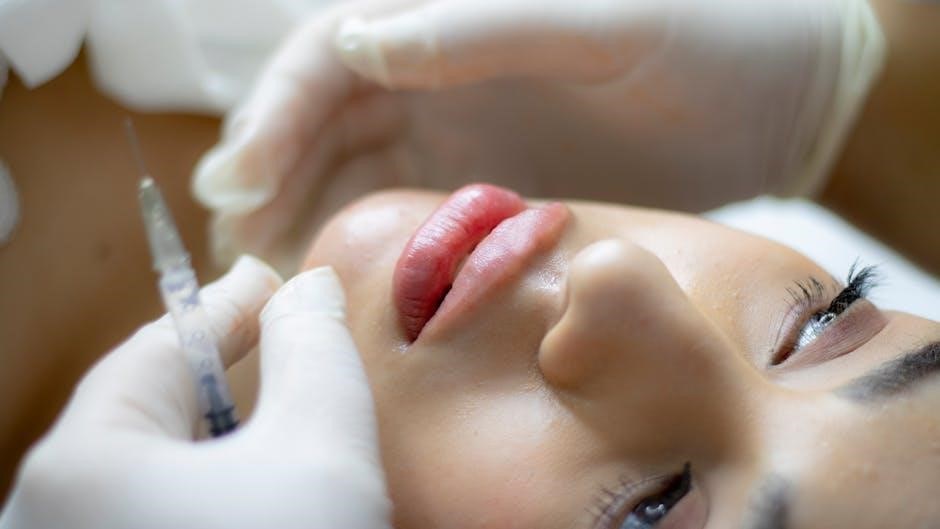
Needle vs. Cannula Techniques
The choice between needles and cannulas impacts precision, safety, and patient comfort during lip filler injections, with each method presenting distinct advantages.
Needle Injection: Advantages & Disadvantages
Needle injections offer superior precision for targeted filler placement, allowing practitioners to address specific lip contours with accuracy. This direct approach is beneficial for smaller volume adjustments and detailed sculpting.
However, needle injections carry a slightly higher risk of bruising and localized discomfort compared to cannula techniques. The sharper tip can potentially cause more trauma to surrounding tissues and vessels, increasing the possibility of visible post-procedure effects. Careful technique and anatomical knowledge are crucial to mitigate these risks.
Cannula Injection: Advantages & Disadvantages
Cannula injections utilize a blunt-tipped instrument, navigating between tissue planes rather than piercing directly through them. This method generally results in reduced bruising, swelling, and discomfort for the patient, offering a smoother recovery experience.
However, cannulas provide less precise filler placement compared to needles, potentially requiring more product to achieve the desired volume. Tactile feedback is diminished, demanding a strong understanding of lip anatomy and careful technique to avoid off-target injections.
Injection Depth and Plane
Strategic layering—superficial, mid, and deep—is crucial for natural-looking lip augmentation, mimicking the lip’s inherent structure and achieving subtle, balanced results.
Superficial vs. Deep Injection
Superficial injections, placed closer to the lip surface, are ideal for defining the vermillion border and creating subtle volume, enhancing projection without significant alteration.
Conversely, deeper injections target the structural support of the lips, building foundational volume and addressing age-related loss, offering a more substantial reshaping effect.
The choice depends on the desired outcome; superficial for refinement, deep for reconstruction, and a combined approach often yields the most natural and harmonious results.
Layering Techniques for Natural Results
Achieving a natural lip appearance relies heavily on layering filler strategically, mimicking the lip’s inherent anatomy and avoiding a uniform, artificial look.
Initial deeper injections establish foundational volume, followed by superficial layers to refine shape, define the border, and address textural imperfections.
This multi-layered approach allows for precise control, gradual volume building, and a softer, more dynamic result that moves naturally with facial expressions.
Managing Complications
Prompt recognition and treatment of vascular occlusion are paramount, alongside effective strategies for minimizing swelling and bruising post-procedure.
Diligent patient monitoring and preparedness are crucial for safe and successful lip filler outcomes.
Vascular Occlusion Recognition & Treatment
Recognizing vascular occlusion is critical, presenting as immediate, intense pain, blanching, or a dusky discoloration of the lip. Delayed recognition can lead to necrosis.
Immediate treatment involves stopping the injection, applying gentle massage, and administering hyaluronidase to dissolve the filler, restoring blood flow.
Prompt medical intervention, including potential consultation with a vascular surgeon, is essential for severe cases. Thorough documentation and preventative measures are also key.
Managing Swelling and Bruising
Post-injection swelling and bruising are common, typically peaking within 24-48 hours and resolving within a week. Applying cold compresses immediately after the procedure minimizes both.
Patients should avoid blood-thinning medications and supplements like ibuprofen and vitamin E prior to treatment to reduce bruising risk.
Gentle massage can aid lymphatic drainage, while arnica cream may help with bruising. Realistic expectations regarding downtime are crucial for patient satisfaction.
Patient Assessment and Consultation
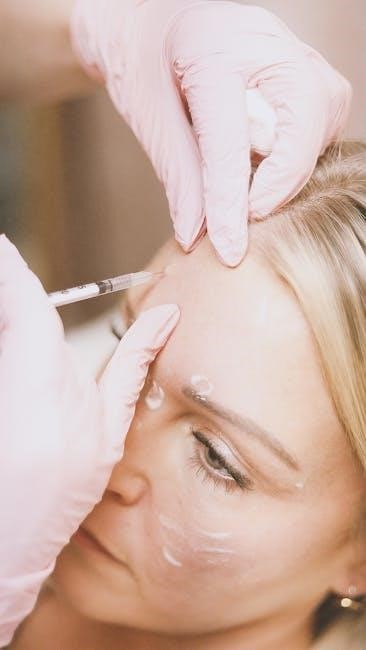
Thorough assessment of facial anatomy and patient goals is paramount for successful lip filler treatment, ensuring realistic expectations and safety.
Identifying ideal candidates and discussing potential outcomes are vital components of the consultation process.
Ideal Candidate Selection
The best candidates for lip fillers generally possess good overall health and realistic expectations regarding achievable results. Individuals with well-defined lip structure but desiring increased volume or improved symmetry often find fillers beneficial.
Those seeking correction of age-related volume loss or enhancement of lip shape are also suitable. However, patients with active oral herpes, skin infections, or significant medical conditions require careful evaluation and may not be ideal candidates.
A comprehensive medical history and physical examination are crucial for determining suitability.
Setting Realistic Expectations
Open communication is paramount; patients should understand lip fillers enhance, not fundamentally alter, facial features. Achieving a natural look requires a collaborative approach, discussing desired outcomes and limitations.
It’s vital to convey that results are temporary and require maintenance treatments. Social media portrayals often showcase extreme transformations, which aren’t always attainable or desirable.
Educating patients about potential swelling, bruising, and asymmetry helps manage expectations post-procedure.

Post-Injection Care and Maintenance
Immediate aftercare involves avoiding strenuous activity and extreme temperatures. Maintenance treatments are crucial for sustaining desired lip volume and shape over time.
Immediate Aftercare Instructions
Following lip filler injections, avoid touching or applying pressure to the treated area for at least six hours to prevent displacement of the product. Minimize strenuous exercise, excessive sun exposure, and extreme temperatures – including saunas and hot yoga – for 48-72 hours.
Apply a cold compress intermittently to reduce swelling and bruising. Avoid alcohol and blood-thinning medications like ibuprofen, as they can exacerbate bruising. Stay hydrated and gently cleanse the area as usual, avoiding harsh products.
Filler Dissolution (Hyaluronidase)
Hyaluronidase is an enzyme used to dissolve hyaluronic acid (HA) fillers, offering a crucial safety net for managing complications like vascular occlusion or unsatisfactory aesthetic results. It works by breaking down the HA molecules, gradually reducing filler volume.
The process is relatively quick, with effects visible within 24-48 hours, though multiple sessions may be needed for complete dissolution. It’s a valuable tool for practitioners, ensuring patient safety and satisfaction.
Legal and Ethical Considerations
Informed consent is paramount, detailing risks and benefits; scope of practice must be strictly adhered to, ensuring qualified practitioners deliver safe, ethical treatments.
Informed Consent
A thorough informed consent process is absolutely crucial before any lip filler procedure. Patients must receive comprehensive details regarding potential risks, including swelling, bruising, vascular occlusion, and infection;
Realistic expectations should be established, clarifying that results vary and are not permanent. The practitioner’s qualifications and the specific filler product used must be clearly explained.
Documented consent demonstrates respect for patient autonomy and mitigates legal liabilities, ensuring a transparent and ethical practice.
Scope of Practice
Practitioners administering lip fillers must operate strictly within their legal scope of practice, determined by their medical training and licensing.
Nurses, physician assistants, and other healthcare professionals require appropriate delegation and supervision from a qualified physician.
Performing procedures beyond one’s authorized scope can lead to legal repercussions and, more importantly, compromise patient safety, highlighting the need for adherence to established guidelines.

Resources and Further Learning
Staying current requires exploring relevant journals, publications, and online courses focused on advanced techniques and safety protocols in lip augmentation.
Relevant Journals and Publications
Accessing peer-reviewed literature is crucial for practitioners seeking in-depth knowledge. Journals like the Journal of Cosmetic Dermatology and Aesthetic Surgery Journal frequently publish research on dermal fillers, including injection techniques and complication management.
Publications from organizations such as the International Society for Aesthetic Plastic Surgery (ISAPS) offer valuable insights and updates on best practices. Regularly reviewing these resources ensures adherence to evolving standards and promotes patient safety within the field.
Online Courses and Workshops
Numerous platforms offer specialized training in lip filler injection techniques, catering to varying experience levels. The YouTube platform itself hosts instructional videos, though critical evaluation of source credibility is essential.
Dedicated aesthetic training providers offer comprehensive online courses and hands-on workshops, often led by experienced injectors. These programs frequently cover anatomy, product selection, and complication management, enhancing practical skills and knowledge.
Future Trends in Lip Filler Techniques
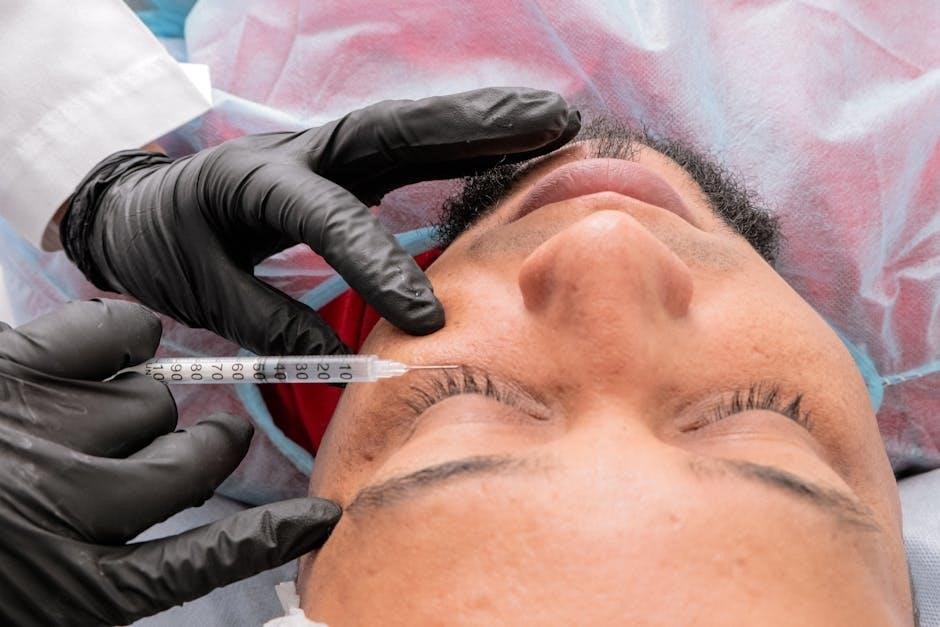
Biostimulatory fillers and personalized approaches are emerging, focusing on collagen production and tailored treatments for natural-looking, long-lasting lip rejuvenation.
Biostimulatory Fillers
Unlike traditional hyaluronic acid fillers that provide immediate volume, biostimulatory fillers work by stimulating the body’s natural collagen production over time. These innovative products, often containing poly-L-lactic acid (PLLA) or calcium hydroxylapatite (CaHA), offer a more gradual and natural-looking enhancement.
This approach not only improves lip volume but also enhances lip texture and overall skin quality, leading to longer-lasting results. The focus shifts from simply adding volume to rebuilding the structural foundation of the lips, offering a potentially more sustainable solution.
Personalized Filler Approaches
The future of lip augmentation lies in highly personalized treatment plans, moving beyond standardized techniques. Recognizing that each lip possesses unique anatomical features and aesthetic goals is paramount.
Practitioners are increasingly employing detailed facial assessments and 3D imaging to create bespoke filler strategies. This includes considering lip shape, volume distribution, and dynamic wrinkles, ensuring natural-looking and harmonious results tailored to the individual’s facial structure.